The Story of Hatshepsut: Egypt’s Great Female Pharaoh
Osama Mohammad • September 5, 2026

The Story of Hatshepsut: Egypt’s Great Female Pharaoh

Hatshepsut was one of the most remarkable rulers in the history of ancient Egypt. She lived more than 3,500 years ago and became one of the few women to take the full title and authority of a pharaoh. Her reign was not only remarkable because she was a woman ruling a traditionally male position, but also because Egypt enjoyed a period of prosperity, ambitious construction, international trade, and political stability during her time.

Hatshepsut belonged to Egypt’s powerful 18th Dynasty of the New Kingdom. She was the daughter of Pharaoh Thutmose I and his principal queen, Ahmose. Growing up in the royal palace, she received the education and religious training expected of a member of the royal family. Her royal background would later become one of the strongest foundations for her claim to the throne.

Hatshepsut’s Early Life

Hatshepsut married her half-brother, Thutmose II, as was common among the Egyptian royal family. The marriage helped preserve the royal bloodline and strengthen the legitimacy of the dynasty.

Hatshepsut and Thutmose II had a daughter named Neferure. However, Thutmose II did not have a surviving son with Hatshepsut. His successor was a young boy named Thutmose III, whose mother was a secondary wife called Isis.

When Thutmose II died, Thutmose III was still a child and too young to rule Egypt independently. Hatshepsut therefore became regent, governing the country on behalf of the young king.

At first, her position was not unusual. Royal women could play important political roles, especially when a young king needed guidance. However, Hatshepsut gradually became much more powerful.

From Queen to Pharaoh

During the early years of Thutmose III’s reign, Hatshepsut increasingly appeared in official monuments and religious ceremonies. She presented herself as an important member of the royal family and a protector of the kingdom.

Eventually, Hatshepsut took an extraordinary step. She adopted the full titles and symbols of an Egyptian king.

Instead of remaining only a queen or regent, she presented herself as the legitimate pharaoh of Egypt. Thutmose III continued to hold the title of king, but Hatshepsut became the dominant ruler.

Her decision was remarkable because Egyptian kingship was traditionally associated with men. Yet Hatshepsut did not completely abandon the traditional image of a pharaoh. In some statues and reliefs, she was represented with feminine features and titles, while in other official images she appeared wearing the traditional clothing, crown, and false beard of a male king.

The purpose was not simply to hide the fact that she was a woman. Egyptian royal art was highly symbolic. The image of the king represented authority, divine power, stability, and the responsibility to maintain maat—the Egyptian concept of order, balance, truth, and justice.

Hatshepsut understood this system and used it to establish her legitimacy.

Divine Right to Rule

Hatshepsut also used religion to strengthen her position.

Inscriptions at her great temple at Deir el-Bahari tell the story of her divine birth. According to the story, the god Amun chose her mother and became the divine father of Hatshepsut.

The message was powerful: Hatshepsut was not simply a woman who had taken political power. She was presented as a ruler chosen by the gods.

She also emphasized her relationship with her father, Thutmose I. Her royal ancestry gave her an important connection to Egypt’s legitimate ruling family.

Her throne name, Maatkare, connected her kingship with the principle of maat and the solar god Re. Through her names, titles, monuments, and religious inscriptions, Hatshepsut created a powerful image of legitimate divine kingship.

The Temple of Hatshepsut

Hatshepsut’s most famous monument is her magnificent mortuary temple at Deir el-Bahari on the west bank of the Nile in Luxor.

The temple is one of the greatest architectural achievements of ancient Egypt. Its ancient name, Djeser-Djeseru, can be translated as “Holy of Holies.”

The temple was built into the dramatic cliffs of Deir el-Bahari and consisted of several terraces connected by ramps and large colonnades. Its design was very different from the pyramids built by earlier Egyptian kings.

The architect and official Senenmut played an important role in the development of the temple. He was one of Hatshepsut’s most trusted officials and was closely connected with her building program.

The temple was dedicated to several important Egyptian gods, including Amun, Hathor, Anubis, and Ra-Horakhty. It also served as a place where Hatshepsut’s royal cult could continue after her death.

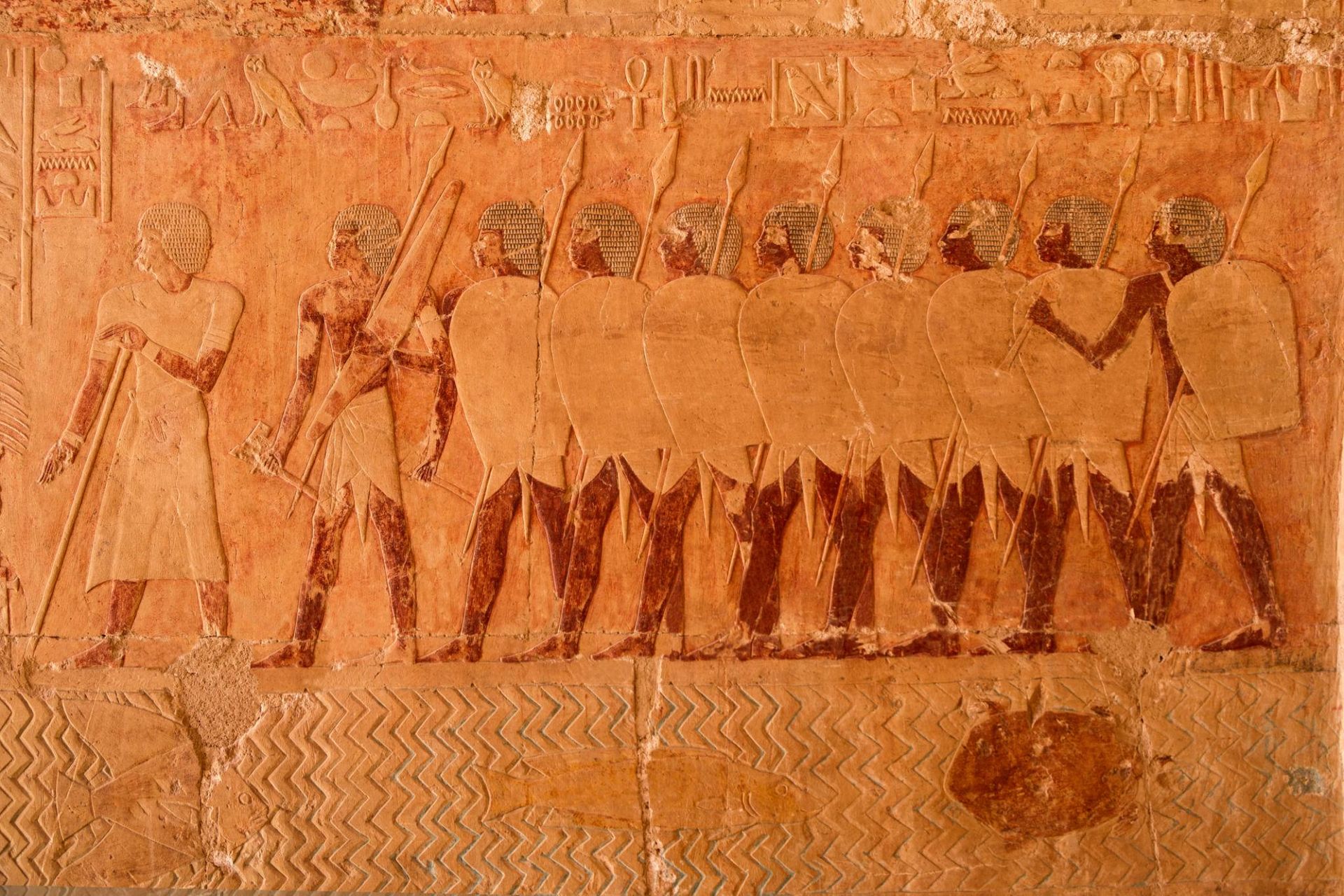
The walls of the temple were decorated with detailed reliefs showing important events from her reign.

Among the most famous scenes are the reliefs depicting the expedition to the Land of Punt.

The Expedition to Punt

One of the greatest achievements associated with Hatshepsut was a major trading expedition to the mysterious Land of Punt.

The exact location of Punt is still debated, but it was probably somewhere in the region of the southern Red Sea and the Horn of Africa.

Egyptian ships traveled to Punt and returned with valuable products such as frankincense, myrrh, gold, ebony, ivory, exotic animals, and valuable plants.

The expedition is beautifully recorded on the walls of Hatshepsut’s temple. The reliefs show ships sailing across the sea, foreign people, houses, animals, trees, and the valuable goods brought back to Egypt.

The journey was important economically, but it also had political and religious significance.

Hatshepsut presented the expedition as evidence of Egypt’s prosperity and the support of the gods for her rule. The success of the journey demonstrated that Egypt was powerful enough to establish peaceful commercial relationships with distant lands.

Unlike some later Egyptian kings who became famous primarily for military campaigns, Hatshepsut became particularly famous for trade, construction, religion, and economic development.

Hatshepsut the Great Builder

Hatshepsut launched one of the most ambitious building programs of her time.

Her projects were not limited to Deir el-Bahari. She commissioned monuments, temples, statues, and obelisks in different parts of Egypt.

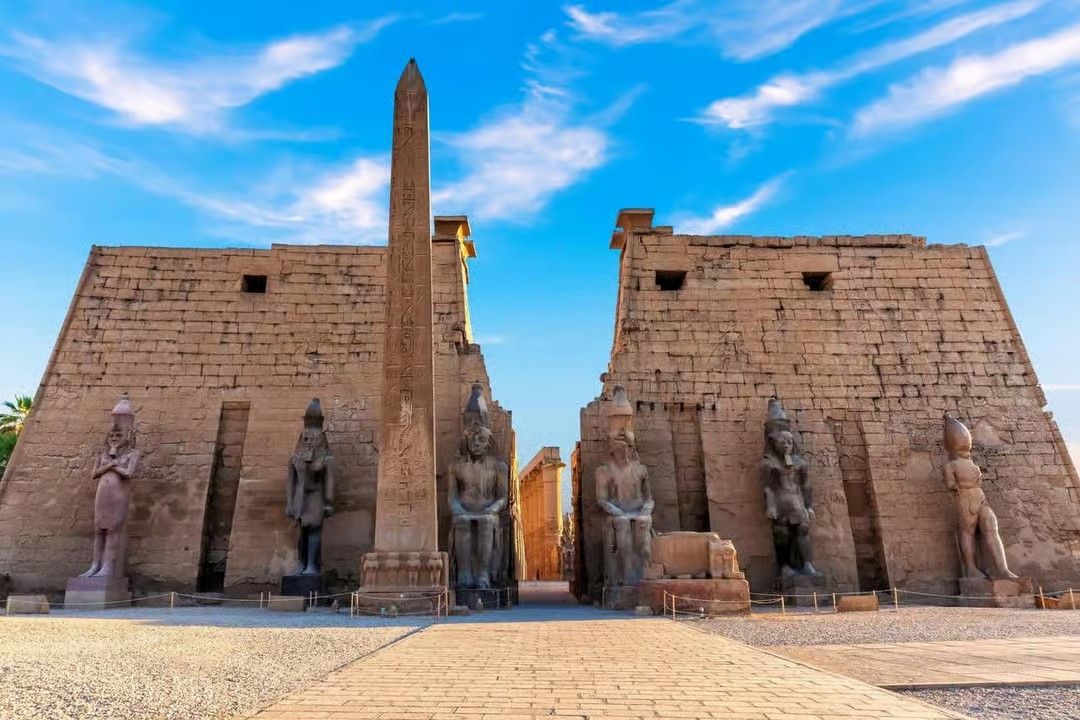
One of her most famous achievements was the construction of enormous obelisks at the temple of Amun at Karnak in Thebes.

The obelisks were designed to honor the gods and demonstrate the power of the pharaoh. One of Hatshepsut’s surviving obelisks at Karnak remains an impressive monument today.

She also restored older temples and religious sites that had suffered damage or neglect.

Her building projects strengthened her relationship with the powerful priesthood of Amun and demonstrated that Egypt remained prosperous and stable under her rule.

Hatshepsut and Thutmose III

The relationship between Hatshepsut and her stepson, Thutmose III, has been the subject of considerable historical debate.

For many years, historians believed that Thutmose III hated Hatshepsut and ordered the destruction of her monuments after her death because he wanted revenge.

However, modern research suggests that the situation was more complicated.

Thutmose III ruled alongside Hatshepsut for many years. After her death, he became the sole ruler of Egypt and eventually became one of its greatest military kings.

During his reign, Egypt expanded its influence across the Near East through a series of successful military campaigns.

Some of Hatshepsut’s statues were destroyed, and her name and images were removed from certain monuments. However, much of this destruction appears to have happened years after her death rather than immediately.

Historians believe that the changes may have been connected to royal succession, political tradition, and the desire to restore a more conventional image of Egyptian kingship.

Whatever the exact reason, the result was that Hatshepsut gradually disappeared from Egypt’s official historical memory.

The Disappearance of Her Name

After Hatshepsut’s death, her monuments were altered and some of her images were damaged or removed.

Her name was sometimes replaced with the names of other kings. Statues were broken, buried, or reused, and some of her representations were deliberately destroyed.

For centuries, later generations knew little about the remarkable woman who had ruled Egypt.

Her monuments, however, survived.

The great temple at Deir el-Bahari remained standing, even though many of its statues and inscriptions had been damaged.

Modern archaeologists eventually began reconstructing Hatshepsut’s story from the surviving evidence.

Archaeological excavations at Deir el-Bahari played an especially important role in rediscovering her statues, inscriptions, and architectural remains.

Hatshepsut’s Tomb and Mummy

Hatshepsut was associated with a tomb in the Valley of the Kings known as KV20.

Her burial history was complicated, and her mummy was not immediately recognized.

In the early 20th century, several royal mummies were discovered in the Valley of the Kings. Eventually, one mummy found in KV60 was identified as Hatshepsut based on archaeological and scientific evidence.

The identification helped researchers learn more about the famous female pharaoh and added another important chapter to her story.

Today, Hatshepsut’s mummy is associated with Egypt’s National Museum of Egyptian Civilization in Cairo, where visitors can learn about Egypt’s royal mummies and the scientific research used to study them.

The Legacy of Hatshepsut

Hatshepsut’s reign lasted roughly two decades, and she left behind a remarkable legacy.

She successfully ruled Egypt during one of its most powerful periods. She supported major religious institutions, encouraged international trade, commissioned enormous monuments, and created some of the most beautiful surviving works of Egyptian art.

Her mortuary temple at Deir el-Bahari remains the most famous symbol of her reign.

Her reliefs showing the expedition to Punt provide valuable information about ancient Egyptian trade and international relations.

Her obelisks at Karnak demonstrate the enormous resources available to the Egyptian monarchy.

Her statues and inscriptions reveal how an ambitious ruler used religion, art, architecture, and royal tradition to establish her legitimacy.

Perhaps the most remarkable part of her story is that she was nearly erased from history.

For generations, Hatshepsut’s name was hidden or forgotten. Yet archaeology eventually restored her place in Egyptian history.

Today, she is remembered not simply as Egypt’s most famous female pharaoh, but as one of the most successful rulers of the ancient world.

Hatshepsut’s Place in Ancient Egypt

Hatshepsut’s story is a powerful example of how political power worked in ancient Egypt.

She did not simply reject the traditions of Egyptian kingship. Instead, she adapted them to her circumstances.

She used royal titles, religious beliefs, traditional symbols, monumental architecture, and her connection to the gods to establish herself as a legitimate ruler.

Her reign shows that ancient Egypt was capable of producing powerful female leaders even within a political system dominated by male kings.

More than 3,000 years later, visitors can still see her achievements throughout Egypt.

At Karnak, her obelisks continue to rise above the ancient temple complex. At Deir el-Bahari, her magnificent temple still stands beneath the cliffs of Luxor. The reliefs of Punt continue to tell the story of her trading expedition, while museums preserve statues and objects connected with her reign.

Hatshepsut may have disappeared from official history for centuries, but her monuments ensured that she could never be completely forgotten.

Today, she stands as one of the most fascinating figures of ancient Egypt—a ruler who transformed the traditional role of a queen, became a pharaoh, strengthened Egypt’s prosperity, and left behind an architectural legacy that continues to amaze visitors from around the world.

Her story is ultimately a story of ambition, intelligence, political skill, faith, and determination.

Hatshepsut proved that the power of a pharaoh was not defined only by gender. It was defined by the ability to rule, build, protect the kingdom, honor the gods, and leave a lasting legacy.

That is why, thousands of years after her death, the name Hatshepsut remains one of the most recognizable names in the history of ancient Egypt.

Christian Cairo Day Tour 2022
October 12, 2022
Private Islamic and Christian Cairo Day Tour 2022 _____________________________________ Duration : 8 Hours Overview : Explore Cairo’s dynamic Christian and Islamic history on a walking day tour of the old city. The outing is divided into two segments. First you’ll visit Christian Coptic Cairo—among the most important locations for Christians in Egypt—and visit a church and a synagogue. After a lunch break at a local restaurant, continue on to learn about Islamic Cairo, where you’ll have the opportunity to enter two mosques. Walking tour of Christian Coptic Cairo and Islamic Cairo . Tour led by a Qualified Egyptologist guide . Lunch, snacks, and bottled water included . Hotel pickup and drop-off included What's included? All transfers in private A-C latest model vehicles . Hotel Pickup And Drop Off . bottled Water . Exclusions Personal Items Tipping Any Optional tours Entry Fees (Optional) Lunch at Local restaurant (Optional) Qualified Egyptologist guide (optional) Please note Passport required Note : For pick up from these Areas will be an Extra charge. New Cairo.( all Areas) . 6 October Area. Airport Areas. Heliopolis Area. Nasr City Area. Alexandria Desert Road. Or other Areas far. Note 2 : English tour is free but for other Languages ( Spanish. .Italian.. French.. German.. Russian.. Chinese ) or other languages will be an Extra charge. Cancellation policy Bookings are non-refundable. All sales are final. Experience type Day tour / activity Booking in advance Can be booked until last minute Duration 8 hours Difficulty Very easy Supported accessibility Limited mobilityLimited sight Categories Pilgrimage or ReligionDay trips and excursionsPrivate experience Live tour guide EnglishItalianPortugueseSpanis h  Adults: 1 x $126.88 Adults: 2 x $299.00 Children: 1 x $45.68
cairo
October 12, 2022
3 Days 2 Nights Package Private Tour in Cairo 3 days (approx.) Hotel pickup offered Mobile ticket Overview : First of all you be picked up from the airport to your hotel. And it will included in this Package. The Following Day ( First Day ) . In the morning you will be picked up from your hotel by our tour professional tour guide. Then you will go to visit the Pyramids of Giza which we consider it one of the Seven wonders of the world. Where you can see the Great pyramid of Giza .Pyramid of Khafre and Mykerinos Pyramid. Then you will have Lunch too. Then Shopping tour included. Then you will visit The Complex of king Zoser. to See the First pyramid and Construction in the whole world. The third Day you will visit Egyptian museum where you can see the Artifacts of King Tutankhamun ( Sarcophagus Weight 111 KG of pure Gold . The Mask of King Tutankhamun weight 11Kg . Then Lunch also included in your Package. . Visit the Citadel of Saladin where you can the whole Cairo from the Top and you will see Alabaster Mosque of Mohamed Ali built 1831A.D. . Then you will see Khan el khalili Market What's Included : pick up from Cairo airport and Dropp off at your hotel. Expert English | Portuguese | Spanish | Italian & more tour guide. Taxes and Services. Snacks. Hotel accommodation 4 Stars with Breakfast. ( Option 1) Snacks During the tour. Transportation with a nice vehicle airconditiong. Khan el khalili and El Moaz Street Entrance fees are included 2 Lunch are included in both 2 Options What's Excluded : Entrance fees for all the mentioned Sites. Tipping for our Team( Guide and Driver) . Any other tour not mentioned. Inside the Great pyramid. Drinks are not included ___________________________________________________ Meeting And Pickup Pickup points Select a pickup point Pickup details We pick up from Hotels. ______________________________________________ What To Expect Day 1 Pick up and dropp off at your hotel. 1 Stop 1 Cairo You will be picked up by our Representative holding a Sign with your name. Note : English tour is free but for other Languages ( Spanish..Italian.. French.. German.. Russian.. Cinese .or other languages will be an Extra charge. Admission Ticket Free Accommodation: Meals: Not included Day 2 Day tour to visit Pyramids of Giza and Sakkara pyramid. 3 Stops 1 Pyramids of Giza Pyramid of khafre and the third pyramid of mykerinos grand son of Khufu. Then we will ride the Camel to see the best view of the 9 Pyramids .then will see the Sphinx built by king khafre the owner of the Second pyramid. 3 hours . Admission Ticket Not Included 2 Great Sphinx We will see the Sphinx built by king khafre the owner of the Second pyramid. to protect the whole Area. And it was one Rock just Carved it. Lion Body Symbolizes Energy and Human head symbolizes intelligence. Then we will have Lunch at local ristorante ( local Egyptian food). 30 minutes . Admission Ticket Not Included 3 Saqqara (Sakkara) Pyramids Then we will go to see the Complex of king Zoser built in 2700 B.C the first construction in the world . It has the enclosure wall . And the first Step pyramid the first step pyramid built by king Zoser. Then you will see in Saqqara the pyramid of Teti which has the First Pyramid Texts in the history. Then you will see also Tomb of Kagmni which has very nice inscriptions showing different scenes of Every day life fishing, farming, hunting and tax payments. At the End you will be dropped of at your hotel. 2 hours Admission Ticket Free Accommodation: Not included Meals:. Not included Day 3 Day tour to visit Egyptian and Citadel of Saladin. 4 Stops 1 The Museum of Egyptian Antiquities Day tour to the Egyptian museum & Citadel of Saladin : The Egyptian museum is considered the first museum in Egypt and it has more than 160,000 items dates back to Old Kingdom,Middle and New Kingdom, The Egyptian museum at Tahrir Square Consists of 2 floors the first floor which has the most important masterpieces date back to Old Kingdom,Middle and New Kingdom. While the Second floor has the Treasure of King Tutankhamun, the king boy .his tomb discovered by Howard carter the British Archaeologist in 1922 and it was the Unique tomb which discovered intact. Carter Discovered more than 3500 items . And The Golden Mask ( 11 Kg of Pure Gold) and 3 Sarcophagus one of them weight 111 Kg of Pure Gold. 3 hours Admission Ticket Not Included 2 Cairo Citadel Afterwards we will see the Citadel of Saladin built between1176 .. 1183 A.D in order to protect Egypt from Crusaders, from there you will see the whole Cairo from the Top . And you will see Also the Alabaster mosque of Mohamed Ali. Built in 1831 A.D. During the tour you will have Lunch at Local restaurant. At the End Back to your hotel. 2 hours • Admission Ticket Not Included 3 Mosque of Muhammad Ali Afterwards we will see the Citadel of Saladin, from there you will see the whole Cairo from the Top . And you will see Also the Alabaster mosque of Mohamed Ali. Built in 1831 A.D. Back to your hotel. 1 hour • Admission Ticket Not Included 4 Khan Al-Khalili Khan el khalili Market it's the Oldest Markets in Egypt. Dates back to Islamic Period . So Since 1285 A.D. its very Nice Area where you can Enjoy with the Beauty of El Moaz Street founder of Cairo in 971 A.D . You will see also small Streets with very Nice Shops in the Market. Then you will take very Nice photos of Cairo . This tour will be a complementary from Us so it's free of charge no extra charge. 1 hour • Admission Ticket Included Accommodation: Not included Meals: Not included Additional Info Confirmation will be received at time of booking Wheelchair accessible Service animals allowed Surfaces are wheelchair accessible No heart problems or other serious medical conditions Most travelers can participate Adult (12 - 99) (Tier 1 - 1) : 370 USD Adult (12 - 99) (Tier 2 - 2) : 252.5 USD Adult (12 - 99) (Tier 3 - 3) : 225 USD Adult (12 - 99) (Tier 4 - 10) : 187.5 USD Child (6 - 11) (Tier 1 - 1) : 180 USD
October 12, 2022
5 Day/4 Night Nile Cruise from Luxor to Aswan Or 4Day 3Night from Aswan to Luxor 5 days (approx.) Pickup from select hotels
By Osama Mohammad October 8, 2022
8 days 7 nights | Trip to Egypt (Cairo, Luxor, Aswan and Abu Simbel) 8 days 7 nights | Trip to Egypt (Cairo, Luxor, Aswan and Abu Simbel) visits in Cairo Giza: Pyramids of Giza, Sphinx, Saqqara and Memphis Cairo City: Egyptian Museum and Khan El Khalili Visits in Luxor Attractions: Valley of the Kings, Temple of Hatshepsut, Colossi of Memnon, Temple of Luxor and Temple of Karnak. Visits in Aswan Attractions: Aswan Dam, Unfinished Obelisk, Philae Temple and Abu Simbel Temples. Itinerary  Day 1 : Day 1: Arrival in Cairo Reception and assistance at Cairo International Airport. Transfer to the hotel. Overnight in Cairo. Day 2 : Day 2: Pyramids of Giza and the Egyptian Museum Breakfast at the hotel. Visit one of the seven wonders of the world, the Pyramids of Giza. Visit to the Sphinx and Valley Temple, built by King Kefren. Visit to the Egyptian Museum, which houses the largest collection of the Pharaonic Empire, monuments of ancient Egypt Also, if there is time, there is a chance to visit Khan El Khalili Bazaar, one of the oldest and most famous bazaars in the Middle East. Transfer to the train station to take the train to Luxor. Dinner and overnight on board. Meals: Breakfast, Lunch and Dinner Day 3 : Day 3: Sightseeing in Luxor Breakfast on board. Arrival, reception and assistance at Luxor station and transfer to the hotel. Visit to the Valley of the Kings, where Kings, some Queens, Princes, Nobles and animals are buried. Visit the Temple of Hatshepsut, the most valuable and prestigious temple built in the valley. Visit to the Colossi of Memnon. Visit to the Luxor Temple Visit Karnak Temple, it was the most influential religious center at the time. Return to the hotel. Overnight in Luxor Meals: Breakfast and Lunch Day 4 : Day 4: Sightseeing in Aswan Breakfast at the hotel. Transfer to Aswan. Visit the Aswan Dam, built in 1960 to protect the country from flooding from the Nile River Egypt. Visit to the Unfinished Obelisk, famous for its red granite. Visit to the Temple of Philae, dedicated to the goddess Isis. Return to the hotel. Overnight in Aswan. Meals: Breakfast and Lunch Day 5 : Day 5: Abu Simbel Temple Group Tour Breakfast at the hotel. Transfer to Abu Simbel, your tour will be in a group. Visit to the Major Temple and Minor Temple. Return to Aswan. Transfer to Aswan train station to take the train back to Cairo. Dinner and overnight on board. Meals: Breakfast and dinner Day 6 : Day 6: Cairo - Optional tour to Memphis and Saqqara Breakfast on board. Arrival, reception and assistance at the Giza train station and transfer to the hotel. Optional tour to visit Egypt's first capital during the ancient kingdom, Memphis and Sakara's Step Pyramid. Return to the hotel. Overnight in Cairo. Meals: Breakfast Day 7 : Day 7: Optional tour to Alexandria Breakfast at the hotel. Optional tour to Alexandria. Visit to the Citadel of Qaitibay, the Catacombs of Kom el Shukafa and the Library of Alexandria. Lunch at a local restaurant. Return to Cairo and overnight at the hotel. Meals: Breakfast Day 8 : Day 8: Departure Breakfast and check-out. Transfer to Cairo International Airport to take the flight back. Meals: Breakfast What's included? All transfers by private, air-conditioned vehicle Cairo-Luxor and Aswan-Cairo train in with cabin for sleeping, dinner and breakfast Expert English/ Italian / Spanish/ Portuguese/ French/ German Guide available as per Request. All entrances to the places mentioned in the itinerary Abu Simbel Sightseeing Tour Sharing Our Group in Air Conditioned Vehicle A bottle of mineral water a day All taxes and fees Reception and assistance at Cairo International Airport Accommodation for 3 nights in Cairo, with breakfast Accommodation for 1 night in Luxor, with breakfast 1 night accommodation in Aswan with breakfast All transfers by private, air-conditioned vehicle Exclusions international flights The entrance to the interior of the sarcophagus of the Great Pyramid of Keops and Tutankamun Tomb in the Valley of the Kings Drinks, tips, personal expenses and extras not mentioned in the program Note: If you wish to participate in the aforementioned tours, please contact us via email so that we can inform you about all the procedures and make the necessary arrangements. What do I need to bring? Nothing, just personal belongings suitable for the number of days of the trip Experience type Multi day tour Pass expiry Never expires Duration 8 days Difficulty Easy Categories City toursArts / cultureMuseums / exhibitionsWalking tour Live tour guide EnglishItalianPortugueseSpanish